
How To Build A House Foundation?
Last Updated:May 6, 2026

Laying the foundation of a house in Texas requires precision, as the state’s soil diversity and climate can pose significant challenges. The process begins with proper planning, including soil testing, selection of the right type of foundation, and calculation of material requirements to ensure a strong and durable foundation. For homeowners and builders, estimation is important to avoid cost surprises and ensure structural integrity.
It is recommended to associate with Texas estimation experts who will be able to assess your property and local soil conditions to provide you with a suitable plan that fits your needs in order to avoid unexpected costs and have a suitable foundation for your home. In this way, you will be able to choose the right type of foundation for your house based on your budget. Let’s walk through the steps that would be involved in laying such a foundation while involving all material considerations and detailing all of those considerations.
Steps To Build a House Foundation
Constructing a house foundation is a process that involves several very important steps that must be carried out with much precision. A step-by-step procedure for laying a strong, stable foundation is provided as follows
Establish the Foundation Design
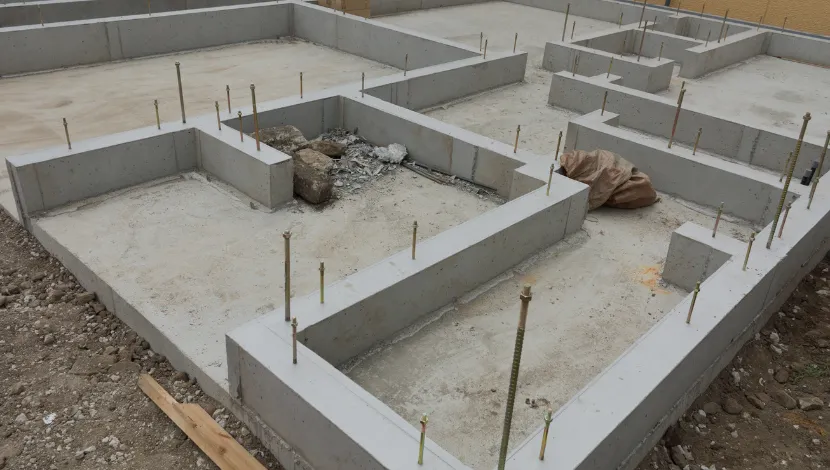
The foundation design is the beginning of any construction work. Designers, engineers, and builders all work together to bring in results. A proper type of foundation must be selected based on site soil, climate, and building requirements.
Consultants with Professionals: Including architects and engineers, have a role that ensures the house foundation design matches the purpose and intent of its use, nature, and type of soil, not to mention fitting local building codes. They’ll also recommend a type of foundation that would go well with that property.
Correct Layout: Once the design is approved, the actual layout of the foundation should be transferred correctly to the site. This means that no problem will be encountered in the actual construction and that the foundation meets the architectural drawings.
Do Site Analysis a House Foundation?
One of the first physical works in the foundation is excavation. Excavation involves, among other things, clearing of land or digging trenches and pits for the foundation.
Site Clearing: All vegetation, debris, and all obstacles have to be cleared off the site. The land has to be graded to attain the foundation level, a very important feature for the stability of the house.
Digging Trenches: Trenches, depending on the foundation type adopted, will be dug to the required depth.
The slab foundation: would only need shallow digging, and deep excavation would be required for the basement or crawl space. The width and depth of this trench would then be prepared according to the size of the foundation that will carry the loads.
Base Preparation For Foundation
Preparing the base before pouring concrete would be essential in ensuring stability and avoiding any future settlement.
Add Gravel or Crushed Stone: Generally, a layer of gravel or crushed stone is added at the bottom of the excavation for proper drainage and to provide a solid and stable surface for laying the foundation.
Compact the Base: The base layer of the gravel or stone should be compacted so that it won’t shift or settle in the future. This will give the foundation a proper and solid base.
Setting up Forms for Foundation
Forms are temporary structures put in place to outline the shape and boundary of the foundation as the concrete sets and cures.
Forms Installation: Depending on the type of foundation, wooden or metal forms are placed around the perimeter of the excavated location. The forms basically give the right shape and size that the walls or slab of foundation should have.
Stabilize and Level: These forms need to be tightly clutched against any movement when concrete is being poured into them. They also need to be level for the evenness of the foundation.
Installation of Reinforcements
These reinforcements are very important in providing strength and flexibility to the concrete, avoiding cracks, and making the foundation strong.
Reinforcement Materials: Rebar or wire mesh is set inside the forms, which are to be laid out with precise engineering specifications. These help distribute the weight of the structure and provide tensile strength to the concrete.
Correct Alignment: This is to be installed on the structure alignment drawings. They should be placed well enough, which will see to it that the concrete resists stress it will bear plus stress.
Start Pouring Concreting
It is important because concreting is central to the foundational element. Any wrong concreting will not take long until this foundation or whatever it constitutes goes weak at once.
Use High-quality Concrete: There’s a real need to have the concrete mixed to standards regarding its strength, durability, and elements’ resistance. The mixture needs to be uniform so that it can sustain the load requirements of the house.
Even Pouring: This involves pouring concrete into the forms. In all cases, this should be combined with the usage of a concrete vibrator to remove air pockets so as to have a smooth and uniform concrete setting.
Smoothen and Level the Surface: Right after pouring, the concrete must be smoothened by floats or trowels to even out the surface. Provide control joints to minimize possible cracking of concrete during curing.
Cure the Concrete
Concrete could set and gain strength through the process called curing. It is important to let the concrete cure to prevent future structural problems.
Concrete Protection: Cure the concrete and do not expose it to heavy rains, intense heat, or frost when the concrete sets. This allows the concrete to be set properly.
Concrete Curing: This will take 7-28 days to heal, and the wait is well worth that effort; a shortcut in this step undermines the strength of your foundation.
Waterproof and Insulate: The two major steps to keep the foundation dry and your home energy efficient are waterproofing and insulation.
Waterproofing: Waterproofing is the process of applying a waterproof membrane or coating around the foundation. It prevents water from entering the foundation, which causes possible harm, such as mold development and erosion.
Insulation: In cold climates, insulation is applied to prevent the loss of warm air and enhance energy efficiency. Proper insulation cuts down on condensation and keeps back the buildup of moisture.
Backfill Around the Foundation
Backfilling around the foundation area starts after the foundation has achieved a complete cure. The process adds further protection and support to the building from beyond the structure.
Compact Backfill: Fill the soil around the area of the foundation and compact it to prevent settlement. Suitable backfill will keep the foundation stable and the supporting soil supportive.
Grading for Drainage: correct grading will work to have the grounds slope off from the foundation. This can prevent water accumulation near the foundation, which will lead to several structural ills in the long run.
Types House Foundation
This determines what kind of house foundation you settle for because it will go a long way in determining your home’s strength, cost, and lifespan. Many factors determine what type of house foundation to choose, including the soil conditions, climate, and design of the house.
Slab on Grade Foundation
The slab-on-grade foundation refers to the placement of a continuous concrete slab directly on the ground. This form of foundation is exceedingly common in warm climates where soil and water table freezing is minimal. In this form of foundation, the slab is both the floor and the foundation for the house.
Slab-on-grade foundations are relatively easy and quick to construct. It requires less excavation compared to other types of foundations, reducing labor costs. Generally, the cost of materials and labor is less than for more complex foundations, which makes it a popular choice for residential buildings.
Crawl Space Foundation
A crawl space foundation leaves a small, usually between 18 inches and 4 feet, high between the ground and the first floor of the house. The space allows access to utilities and plumbing systems, while it can be used to provide ventilation to reduce moisture buildup under the house.
It allows air to circulate and helps reduce the chance of mold and moisture problems in the house. This is particularly helpful in those regions with very high humidity or a high water table.
The crawl space offers easy access to plumbing, electrical, and HVAC systems for maintenance. It thus makes any future repairs or changes easier and less costly. House elevation off the ground by the crawl space improves the resistance of the house to flooding and water damage in areas with high rainfall.
Basement Foundation
The basement foundation requires the digging of an extended way into the earth to create space beneath the house. Basements often occur in regions where clay soil expands and contracts significantly or is too deep for the water table, meaning the ground doesn’t flood.
Basements offer very valuable extra space that can be used for bedrooms, home offices, storage, or recreation areas. This greatly expands the useful square footage of the house.
Basements will allow the residence above to be on higher ground from frost or high rainfall and even further minimize the risk of flooding.
Pile Foundation
A pile foundation is basically adopted where the soil is incapable or too weak to carry the structure’s weight by regular foundations. In such cases, piles are driven to considerable depths into the ground to anchor the structure to firmer soil or bedrock below. Pile foundations are common in flood zones or areas with loose, sandy, or soft soil.
Pile foundations serve properties built on either poor-quality soils or soft grounds where other foundation types may turn out unstable. They transfer weight from the structure to deeper layers of soil where there is stability. Constructed correctly, a pile foundation could be strong enough and resistant to settlement, proving them ideal for long-term, non-settling buildings.
Foundation Building Requirements
Building a foundation in Texas requires careful attention to various regulations and local conditions to ensure the structure’s durability and compliance with state and city codes.
Preparation of the Site
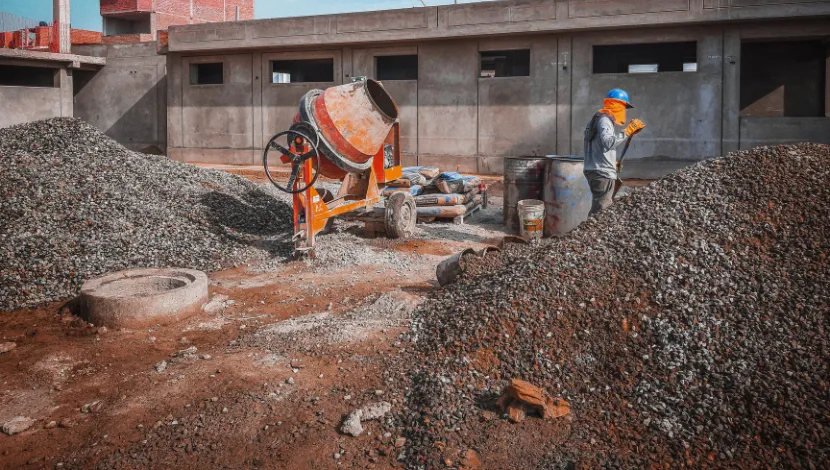
Site land clearing: There should be no trees, bushes, big rocks, or any debris. All of it makes sure the grounds are free and without any barriers in order for the digs to proceed properly.
Grading: The location has to be level enough, in good condition, well-drained in fact. Grading would provide excellent water flow outward to avoid erosion or any eventual flooding if land slopes towards its foundation, probably damaging the basement or, even worse, the very house.
Soil Testing: The soil should be tested to support the foundation. Poor soil conditions may require special reinforcement or a deeper foundation.
Local Building Codes and Permits
Building Codes: The local building codes dictate how the foundation shall be laid based on factors such as the type of soil, climate, and the size of the structure. For instance:
The Minimum Depth: of foundations lay depending on frost lines and/or local weather.
Material Specification: for concrete, reinforcement, and waterproofing.
Frost Line: In cold climates, the foundation needs to be below the frost line. The frost line is the depth below which the ground will not freeze and thaw with the seasons.
Permits: You must obtain permits from your local government before you start building. Permits ensure the project is done to code and that proper inspections are completed at various points during the construction process.
Structural Design Requirements
A structural engineer will evaluate the soil conditions and then design a foundation that can carry the load of the building through to the earth, considering the frost line depth of the earth to which water may freeze in winter and soil stability. The structural engineer will need to determine the following
- How much of the load will need to be supported by the foundation?
- The type of foundation slabs, crawl spaces, and full basements are all common.
- Rebar or other reinforcement to prevent cracks.
- Consider local environmental conditions, such as seismic activity or flooding risks.
General Foundation Depth Guidelines
Slab-on-Grade: A concrete slab is laid directly on the ground, normally 4–6 inches thick. Suitable for stable soil but may need thicker footings for soft or wet ground.
Crawl Space: A raised foundation with an 18–48 inch gap between the house and the ground, allowing airflow and easy access to plumbing.
Basement: A deep foundation provides an additional space, usually 8 feet or deeper, under the house for storage or a living area.
Pile Foundations: A very long column that is driven deeper into the soil towards stable soil or rock can be used when there is too weak of surface soil to support the use of a normal foundation.
Building Control and Home Warranty
Following the right steps and building codes is a must when building your home’s foundation for its long-term stability.
Building Control
Footing Inspection: They check whether the footings have been poured to the proper depth and set correctly to bear the structure’s weight.
Reinforcement Check: The inspectors check the placement of rebar or wire mesh reinforcement to provide additional strength and prevent cracks in the foundation.
Final Inspection: When the foundation is laid, a final inspection is made to ensure that all building codes are met before commencing the next phase of construction.
Home Warranty
A home warranty can protect the buyer in case major defects arise with a home’s foundation, such as cracks, shifts, or other water-related damages. Knowing a few facts about your warranty, for example, whether hairline cracks or only structural crack repairs should be covered, is essential.
Water Damage: Whether flooding or water penetration due to faulty foundation design is included.
Settlement: Some may not include settling, which happens naturally over time, but may include foundation shifting due to soil movement.
Conclusion
Lay a firm, solid foundation so that your home may last longer and be relatively stable. The materials used are appropriate for careful planning and are complemented by building codes. Always take the advice of the pros, such as engineers and contractors. A well-laid foundation eliminates the chances of a number of hassles later on, thereby saving you time and money.
Recent Post
-
How Much Does It Cost to Build a 2,000 Sq Ft House in Texas?
Building a house is often one of the most significant investments a person can make. For those planning to construct a 2,000 sq. ft. on average, the cost to build…
-
How Much Do Civil Engineers Make in Texas?
With the rapid development of infrastructure and construction in Texas, the demand for skilled civil engineers is always high. The average salary range is usually between $75,000 and $125,000 annually. However, this…
-
Average Cost Per Square Foot to Build a House in Texas
The average cost per square foot to build a home in Texas is between $100 to $150 per square foot for standard construction. Assuming standard finishes and simple design, this would bring…